Virtual Reality in Education Transforming the Learning Experience
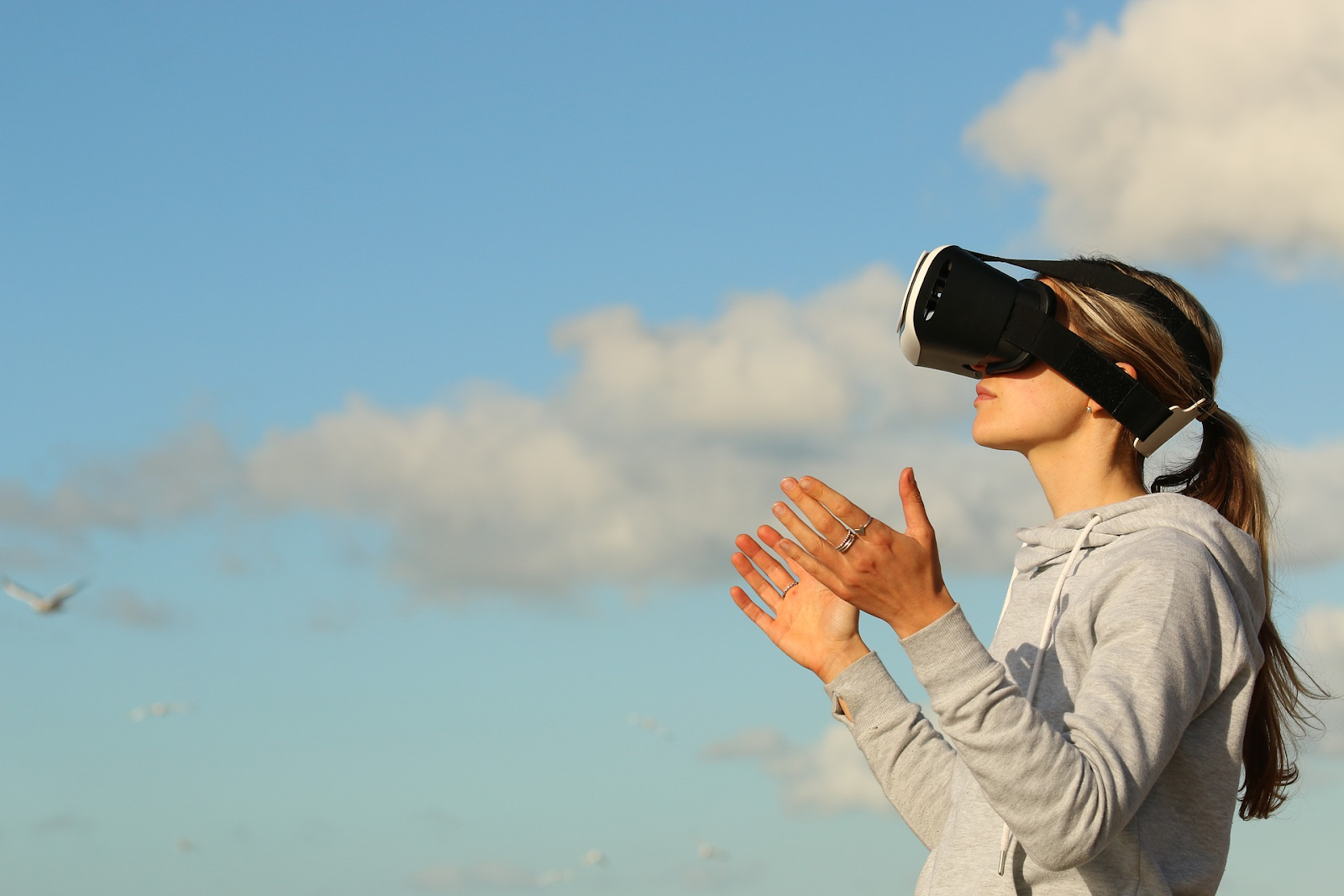
Education has always evolved alongside technology. From handwritten manuscripts to printed textbooks, from blackboards to digital screens, each technological shift has reshaped how people learn. Today, virtual reality (VR) represents one of the most significant transformations yet. Unlike previous tools that primarily delivered information, VR has the potential to change the very experience of learning by placing students inside interactive, immersive environments.
Virtual reality allows learners to step beyond the classroom walls and engage directly with content. Instead of reading about ancient civilizations, students can walk through reconstructed cities. Instead of imagining molecular structures, they can explore them in three dimensions. Instead of passively watching demonstrations, they can participate in simulations that respond to their actions. This shift from observation to immersion marks a fundamental change in how knowledge is acquired and retained.
As VR technology becomes more accessible, educators and institutions are increasingly exploring its role in interactive learning. While challenges remain, the promise of VR lies in its ability to make complex topics more understandable, engaging, and meaningful. This essay explores how virtual reality is transforming education, why immersion matters, and what the future may hold for VR-based learning.
Why Immersive Learning Changes How Students Understand
Traditional learning methods often rely on abstraction. Textbooks, lectures, and static images require students to imagine concepts that may be distant from their everyday experience. For many learners, especially visual or kinesthetic ones, this creates a barrier to understanding. Virtual reality addresses this challenge by making learning experiential.
Learning by being inside the concept
Immersion is the defining feature of VR. When students wear a headset, they are no longer simply observing information—they are placed within a learning environment. This sense of presence enhances focus and reduces external distractions. The brain responds to immersive experiences in ways similar to real-world interactions, which can significantly improve comprehension and memory retention.
For example, in physics education, understanding forces, motion, or spatial relationships can be difficult through equations alone. In a VR simulation, students can observe these forces in action, manipulate variables, and see immediate results. This transforms abstract principles into tangible experiences.
Emotional engagement and motivation
Immersive learning also increases emotional engagement. When students feel involved in what they are learning, motivation naturally rises. VR experiences often feel novel and exciting, which can spark curiosity and encourage exploration. This is particularly valuable in subjects that students may initially find intimidating or uninteresting.
Emotional engagement plays a critical role in learning. Studies in educational psychology suggest that emotionally charged experiences are more likely to be remembered. By combining emotion with interaction, VR creates learning moments that stand out.
Supporting diverse learning styles
One of VR’s strengths is its flexibility. Visual learners benefit from rich 3D environments, auditory learners from guided narration, and kinesthetic learners from interactive tasks. This multimodal approach makes VR a powerful tool for inclusive education, helping address the needs of students who may struggle with traditional instruction methods.
Applications of Virtual Reality Across Educational Fields
Virtual reality is not limited to a single subject or age group. Its applications span a wide range of educational contexts, from primary education to professional training.
Science, technology, and medicine
In science education, VR enables students to explore environments that are otherwise inaccessible. They can travel inside the human body, examine cells at a microscopic level, or observe astronomical phenomena from impossible perspectives. In chemistry, molecular interactions can be visualized dynamically, helping students understand reactions beyond symbolic equations.
Medical education has been one of the earliest adopters of VR. Students can practice surgical procedures in simulated environments without risk to patients. These simulations allow repeated practice, immediate feedback, and gradual skill development. Mistakes become learning opportunities rather than critical failures.
History, geography, and the humanities
In the humanities, VR brings context and realism to learning. Historical events can be experienced through immersive reconstructions, allowing students to explore places and cultures rather than memorizing dates and facts. Geography lessons become interactive journeys across landscapes, climates, and urban environments.
This contextual learning helps students form deeper connections with subject matter. History, for instance, becomes less about distant narratives and more about human experiences situated in real environments.
Skill-based and vocational training
Beyond academic subjects, VR plays a growing role in vocational education. Fields such as engineering, aviation, architecture, and emergency response benefit from realistic simulations. Learners can train in complex or hazardous scenarios safely, gaining confidence and competence before entering real-world situations.
Virtual environments allow instructors to standardize training experiences while adapting difficulty levels to individual learners. This combination of safety, consistency, and adaptability makes VR especially valuable for skill-based education.
Interactivity and Feedback in Virtual Learning Environments
What truly distinguishes VR from other educational technologies is interactivity. Learning in VR is not a passive experience; it requires decision-making, problem-solving, and active participation.
Learning through exploration and experimentation
In VR environments, students are encouraged to explore. They can test hypotheses, manipulate objects, and observe outcomes. This mirrors scientific inquiry and supports constructivist learning theories, which emphasize knowledge construction through experience.
For example, in environmental science simulations, students can adjust variables such as pollution levels or land use and observe long-term effects on ecosystems. This interactive experimentation fosters systems thinking and helps learners understand complex cause-and-effect relationships.
Immediate and meaningful feedback
Feedback is essential for effective learning, and VR offers unique opportunities in this area. Virtual environments can respond instantly to student actions, providing visual, auditory, or haptic feedback. This helps learners understand the consequences of their decisions in real time.
Unlike traditional assessments that often occur after instruction, VR feedback is embedded within the learning process. Students learn by doing, reflecting, and adjusting their actions, which promotes deeper understanding.
Collaboration in virtual spaces
Modern VR platforms increasingly support multi-user environments. Students can collaborate within shared virtual spaces, solving problems together or engaging in guided discussions. This social dimension enhances communication skills and mirrors real-world collaborative work.
In blended learning contexts, VR can complement classroom interaction by extending collaboration beyond physical boundaries. Students from different locations can meet in the same virtual environment, sharing perspectives and learning collectively.
Challenges and the Future of Virtual Reality in Education
Despite its potential, VR in education is not without challenges. Understanding these limitations is essential for responsible and effective implementation.
Accessibility and cost considerations
While VR technology has become more affordable, it still requires hardware, software, and technical support. Not all institutions have the resources to implement VR at scale. Ensuring equitable access remains a critical issue, especially in underfunded educational settings.
Additionally, educators need training to integrate VR meaningfully into curricula. Without thoughtful design, VR risks becoming a novelty rather than a transformative learning tool.
Cognitive overload and pedagogical balance
Immersive environments can sometimes overwhelm learners. Excessive sensory input or poorly designed simulations may distract from learning objectives. Effective VR education requires careful pedagogical planning to balance engagement with clarity.
VR should enhance learning, not replace foundational skills such as reading, writing, and critical analysis. The most effective educational models integrate VR as part of a broader learning ecosystem.
Looking ahead
As technology continues to evolve, VR is likely to become more integrated with other educational tools, including artificial intelligence and adaptive learning systems. These combinations could enable personalized virtual learning experiences that adjust to individual progress and needs.
The future of VR in education lies not in replacing teachers or classrooms, but in expanding what is possible within them. When used thoughtfully, VR can transform learning into an active, immersive, and deeply human experience.
Table: Key Benefits and Challenges of Virtual Reality in Education
| Aspect | Educational Benefits | Potential Challenges |
|---|---|---|
| Immersion | Deep engagement and better retention | Risk of sensory overload |
| Interactivity | Active learning and experimentation | Requires careful instructional design |
| Accessibility | Inclusive learning for diverse styles | Cost and technical barriers |
| Skill training | Safe practice in realistic scenarios | Hardware and maintenance needs |
| Collaboration | Shared virtual learning spaces | Dependence on stable technology |
Conclusion
Virtual reality represents a powerful shift in how education can be experienced. By transforming learners from passive observers into active participants, VR makes complex topics more accessible, engaging, and memorable. Its ability to combine immersion, interactivity, and emotional engagement opens new possibilities for teaching and learning across disciplines.
While challenges related to access, cost, and pedagogy remain, the value of VR lies in its thoughtful integration into educational practice. When aligned with clear learning goals and supported by effective instruction, virtual reality has the potential to redefine the learning experience—not by replacing traditional methods, but by enriching them.
As education continues to adapt to a rapidly changing world, virtual reality offers a glimpse into a future where learning is not just about acquiring information, but about experiencing knowledge firsthand.

Leave a Reply