
The Role of Cognitive Biases in Research and Decision Making
In both daily life and academic research, we are constantly confronted with an overwhelming flow of information. Our brains process this information rapidly, but they are prone to systematic errors in perception and reasoning, which are commonly referred to as cognitive biases. These biases arise because the mind relies on mental shortcuts, or heuristics, to make decisions quickly when time or information is limited. While these shortcuts often allow us to respond efficiently in complex situations, they can also lead to consistent errors in judgment.
 Cognitive biases influence how we interpret data, draw conclusions, and choose strategies for action. For students and researchers, understanding these biases is particularly important, as they can shape how hypotheses are formulated, research methods are selected, and results are interpreted. When unrecognized, these biases can subtly distort reasoning, leading to conclusions that may appear sound but are in fact flawed. Conversely, awareness of cognitive biases allows for more reflective thinking, critical evaluation of information, and improved decision-making.
The impact of cognitive biases extends beyond formal research settings. They can affect everyday academic decisions, such as selecting topics for assignments, analyzing statistical data, or assessing one’s own academic progress. Recognizing and mitigating these biases not only enhances the quality of research but also fosters better learning habits and more effective problem-solving skills.
How Cognitive Biases Manifest in Research
Cognitive biases manifest in numerous ways throughout the research process, from the formation of hypotheses to the interpretation of results. One of the most widely recognized biases is confirmation bias, which involves the tendency to seek, interpret, and remember information that supports pre-existing beliefs. In research, confirmation bias can result in ignoring data that contradicts a hypothesis or placing disproportionate emphasis on supportive evidence. For example, a researcher studying the effectiveness of a new educational method might unconsciously focus on positive student outcomes while neglecting instances where the method was less effective, thereby overstating its overall success.
Another pervasive bias is the anchoring effect, which occurs when initial information disproportionately influences subsequent judgments. In academic contexts, this can happen when researchers rely heavily on the first set of results they encounter. For instance, if an early study reports a high level of correlation between two variables, subsequent researchers may unconsciously align their interpretations or experiment designs to match these initial findings, even if later evidence suggests a weaker relationship. The anchoring effect can therefore limit critical evaluation and perpetuate misconceptions within a field of study.
The availability bias is another cognitive tendency that affects research and decision-making. People tend to overestimate the probability of events that are more vivid, recent, or easily recalled. In academic work, this bias can influence the perceived importance of certain findings. For example, a researcher may give undue weight to a dramatic case study or a high-profile publication while overlooking numerous other studies that provide more balanced evidence. Similarly, availability bias can affect risk assessment in experiments, causing researchers to overemphasize rare or memorable outcomes.
The illusion of control is a bias in which individuals overestimate their ability to influence random or uncertain events. In research, this may manifest as excessive confidence in experimental predictions, over-reliance on intuitive judgment, or misinterpretation of random patterns as meaningful. This bias is particularly relevant in fields like behavioral sciences or economics, where human behavior and complex systems can create apparent but illusory patterns.
Groupthink is another influential bias, especially in collaborative research settings. When a group of researchers is overly focused on consensus, dissenting opinions may be suppressed, and critical analysis may be reduced. Decisions may be driven more by social conformity than by objective evaluation of evidence, leading to errors that persist across collaborative projects. Groupthink can undermine the quality of peer-reviewed studies or large-scale research collaborations if unchecked.
| Cognitive Bias | Example in Academic Research | Potential Impact on Results |
|---|---|---|
| Confirmation Bias | Ignoring data that contradicts a hypothesis | Reduced objectivity, distorted conclusions |
| Anchoring Effect | Evaluating data based on early published results | Limited critical analysis, repeated errors |
| Availability Bias | Estimating frequency of events based on memorable examples | Overestimating rare or unusual phenomena |
| Illusion of Control | Overconfidence in experimental outcomes | Subjective interpretations, forecasting errors |
| Groupthink | Adopting the majority opinion within a team | Reduced critical assessment of alternative hypotheses |
Recognizing these biases is crucial, as their influence extends beyond formal research and into daily academic decision-making. The consequences of unchecked cognitive biases can affect the reliability of conclusions, the design of experiments, and the overall credibility of scholarly work.
Cognitive Biases in Everyday Academic Practice
Cognitive biases not only affect research but also have a significant impact on everyday academic activities. One common example is the optimism bias, which leads students to underestimate the time required to complete assignments or overestimate their ability to meet deadlines. A student may plan to finish a research paper in two days, only to realize that careful data analysis and revision require significantly more time. This bias can result in rushed work, missed deadlines, or suboptimal academic performance.
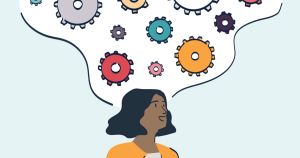 Confirmation bias also plays a role in how students select information sources. Often, students are drawn to materials that align with their pre-existing opinions while ignoring alternative viewpoints or contradictory evidence. This limits the depth of analysis and reduces the development of critical thinking skills. For instance, when writing an essay on climate change, a student might focus exclusively on studies that support their initial stance, overlooking comprehensive research that presents a more nuanced perspective.
Biases similarly influence how students interpret grades and feedback. The availability bias and illusion of control can lead to misattributing success or failure. A student may view a poor grade as the result of a random factor, such as an unusually difficult exam, rather than acknowledging gaps in preparation or understanding. Conversely, they may take undue credit for a positive outcome, attributing success solely to their own actions rather than external influences or collaborative efforts.
In group projects, groupthink often emerges. Students may agree with the majority opinion to avoid conflict, even when it contradicts their knowledge or critical analysis. This can stifle creativity, reduce innovation, and result in decisions that are not fully evidence-based. Awareness of these dynamics encourages students to question assumptions, voice alternative perspectives, and evaluate evidence more rigorously.
Cognitive biases also affect decision-making regarding study strategies and time management. Students might overemphasize tasks they find interesting or memorable, neglecting equally important but less engaging assignments. They may also misjudge their own strengths and weaknesses, leading to inefficient study habits and a misallocation of effort. Recognizing and accounting for these biases can help students adopt more effective learning strategies and improve overall academic outcomes.
Strategies to Reduce the Impact of Cognitive Biases
Fortunately, there are several strategies that can mitigate the influence of cognitive biases in research and academic practice.
Awareness and self-reflection are the first steps. By consciously considering the ways in which personal beliefs and cognitive shortcuts might affect judgments, students and researchers can identify potential biases before they compromise decisions. Maintaining a research journal or analytical notes allows individuals to track patterns of biased thinking, providing a foundation for more objective evaluation.
Statistical methods and experimental controls also reduce subjectivity. Randomization, blind or double-blind designs, and the use of control groups help prevent confirmation bias and anchoring effects from distorting outcomes. Statistical tools provide a framework for evaluating evidence rigorously, enabling researchers to quantify uncertainty and assess the reliability of their findings.
Peer discussions and reviews serve as critical checks against hidden biases. Collaboration and feedback from others reveal assumptions that might go unnoticed when working in isolation. This approach not only enhances objectivity but also promotes intellectual diversity, encouraging the consideration of alternative hypotheses and perspectives.
Diversity in information sources is another essential strategy. Consulting a range of materials, including those that challenge initial assumptions or originate from different cultural and academic contexts, reduces availability bias and broadens understanding. Encouraging students and researchers to engage with contrasting viewpoints fosters a more comprehensive and critical approach to problem-solving.
Finally, realistic planning and time management help counter optimism bias and the illusion of control. Breaking complex tasks into smaller, achievable steps and allocating sufficient time for analysis, reflection, and revision ensures that decisions and outputs are based on careful consideration rather than overconfidence or underestimation.
Applying these strategies consistently can significantly improve the quality of research, the reliability of conclusions, and the effectiveness of academic decision-making. By cultivating habits that counteract cognitive biases, students and researchers enhance both the rigor and credibility of their work.
Conclusion
Cognitive biases are an inherent aspect of human thinking that influence both research and everyday academic activities. They affect how information is interpreted, how decisions are made, and how individuals assess their own performance. Awareness of these biases and the use of strategies to mitigate their effects can greatly enhance objectivity, critical thinking, and overall academic performance.
Students and researchers who can identify and manage cognitive biases develop stronger analytical skills, make more informed decisions, and produce higher-quality work. These abilities foster intellectual maturity, self-awareness, and readiness for both academic and professional challenges. Understanding and addressing cognitive biases is not only a key to academic success but also a vital skill for navigating the complexities of modern life, where the ability to think critically and make informed decisions is increasingly valuable.
By integrating awareness of cognitive biases into education and research practices, academic institutions can promote more reflective, evidence-based approaches to learning and inquiry. This contributes to a culture of intellectual rigor and responsible scholarship, equipping students with the tools they need to excel in both academic and real-world contexts.

Leave a Reply