
Neuroscience of Learning: How the Brain Adapts to New Information
In today’s fast-paced world, the ability to learn new information and acquire skills quickly is more important than ever. The neuroscience of learning helps us understand how the brain perceives, processes, and consolidates information, as well as which learning methods are most effective. This topic is highly relevant for students, educators, parents, and professionals focused on cognitive skill development, as well as policymakers and educational technology developers seeking to optimize learning outcomes in schools, universities, and workplaces.
How the Brain Processes New Information
Learning begins with the brain receiving sensory input—through sight, hearing, touch, or even movement. These signals are processed and integrated across various brain regions. A central concept is neuroplasticity—the brain’s ability to reorganize neural connections in response to experience. Neuroplasticity explains why adults can still learn new skills, languages, or technical tools, even though childhood is often considered the prime period for learning.
For example, when learning a new mathematical concept, areas responsible for logic, visualization, and memory are activated. Repeated practice strengthens synapses, converting short-term memories into long-term ones. In this sense, learning is not simply memorizing facts but actively reshaping neural networks. Studies have shown that the hippocampus, a brain region critical for memory formation, becomes more active during learning tasks that require understanding and problem-solving rather than rote memorization. This emphasizes that meaningful engagement with material produces stronger neural adaptations than passive reading or listening.
Additionally, sensory integration can enhance comprehension. When students learn geometry by physically manipulating shapes or exploring 3D models online, their spatial reasoning skills improve more rapidly than through traditional textbook exercises. This demonstrates that combining sensory channels—visual, auditory, and tactile—reinforces neural connections and supports deeper understanding.
Skill Acquisition and Habit Formation
Neuroscience demonstrates that skills develop through a multi-stage process:
-
Understanding – initial exposure to the material.
-
Practice and application – neural connections are reinforced through repetition.
-
Automation – the skill becomes habitual, requiring less conscious effort.
Consider learning to play a musical instrument. Initially, every note demands full attention. Over time, execution becomes automatic as neural pathways strengthen. Similar processes occur when mastering a language, coding, or professional competencies such as laboratory techniques, medical procedures, or engineering problem-solving. The prefrontal cortex, responsible for planning and conscious decision-making, gradually transfers control to more specialized brain regions, such as the basal ganglia, which handles habitual actions. This shift allows tasks to be performed more efficiently, freeing cognitive resources for higher-level problem-solving.
Habit formation is not limited to manual or technical skills. Cognitive skills, such as mathematical reasoning, logical thinking, and structured problem-solving, also follow similar patterns. Students who regularly practice analytical exercises reinforce neural networks that support abstract thinking, pattern recognition, and creative solutions. These networks persist, enabling faster learning of related subjects and more effective application in real-world contexts.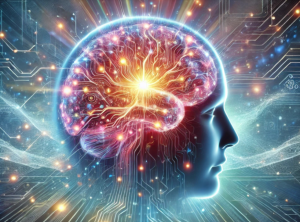
Memory and Retention
Memory is a key component of learning. Neuroscience distinguishes between short-term, working, and long-term memory. Information acquired without repetition or context is quickly forgotten. Effective learning relies on active processing, which includes:
-
Spaced repetition to reinforce memory over time.
-
Connecting new information to existing knowledge.
-
Engaging multiple sensory channels—visual, auditory, and motor.
-
Reflective review and application in problem-solving contexts.
For example, studying anatomy is more effective when combining reading, exploring 3D models, and hands-on exercises. Medical students practicing surgical simulations not only memorize anatomical structures but also develop muscle memory and decision-making skills under realistic conditions. Similarly, mathematics students benefit from solving real-life problems, using visualization software, and discussing solutions with peers. The brain receives a multisensory experience, increasing retention and comprehension while reducing cognitive overload.
Research in cognitive psychology also emphasizes the testing effect: actively retrieving information from memory strengthens learning more than passive review. Therefore, frequent low-stakes quizzes, flashcards, and peer teaching significantly improve retention. Integrating these strategies in classrooms and professional training ensures knowledge is consolidated in durable long-term memory.
Social and Emotional Aspects of Learning
Emotions and social interaction significantly impact learning. Neurotransmitters like dopamine and oxytocin enhance attention and memory consolidation, especially when learning is interesting, enjoyable, or socially engaging. Stress and negative emotions, on the other hand, impair cognitive function and memory formation.
Students participating in group projects, peer discussions, or collaborative problem-solving gain a deeper understanding compared to passive lecture-based learning. Emotional engagement makes learning meaningful and enhances long-term retention. For instance, engineering students working on real-world design projects experience higher motivation, stronger memory retention, and improved critical thinking compared to theoretical exercises alone.
Cultural context also influences learning. Neuroscience studies show that prior experiences, values, and social environment shape how new information is interpreted and stored. Educators who incorporate culturally relevant examples or collaborative learning aligned with students’ experiences see improved engagement and knowledge transfer. This highlights the importance of inclusive and context-aware teaching strategies.
Applications Across Subjects and Professions
Neuroscience-informed learning methods can be applied across disciplines and professions:
| Subject/Skill Area | Example Application | Professions Benefiting |
|---|---|---|
| STEM (math, physics) | Interactive simulations, problem-solving tasks | Engineers, data scientists, mathematicians |
| Medicine and healthcare | VR anatomy, practical skill simulations | Doctors, nurses, surgeons |
| Language acquisition | Spaced repetition apps, immersive exercises | Translators, educators, linguists |
| Creative arts | Hands-on projects, multisensory instruction | Designers, musicians, visual artists |
| Business & management | Case studies, project-based learning | Managers, consultants, entrepreneurs |
| Computer science & IT | Coding challenges, hackathons, algorithm visualization | Software developers, cybersecurity experts |
| Social sciences | Role-playing, scenario analysis | Psychologists, policy analysts, educators |
In STEM fields, repeated problem-solving combined with visual and interactive tools strengthens logical reasoning and memory. In medicine, simulation-based training allows repeated practice of procedures in a safe environment. Language learning benefits from spaced repetition and immersive experiences, while creative professions thrive on multisensory and collaborative projects. In business, scenario-based exercises enhance decision-making and strategic thinking.
Practical Tips from Neuroscience
-
Active engagement: Don’t just read or watch—practice problems, create projects, and test yourself.
-
Use multiple channels: Combine visual aids, audio explanations, and physical interaction to reinforce learning.
-
Spaced repetition: Review key concepts periodically instead of cramming.
-
Contextual learning: Relate new information to real-world examples or prior knowledge.
-
Social interaction: Collaborate with peers, discuss concepts, and teach others.
-
Emotional connection: Find interest or relevance in what you study to enhance memory consolidation.
-
Reflective review: Analyze mistakes and successes to deepen understanding.
-
Incremental challenge: Gradually increase task difficulty to stimulate neural growth without causing overload.
Key Takeaways
-
Learning reshapes neural connections rather than merely storing information.
-
Skills develop through understanding, practice, and automation.
-
Effective retention relies on active, multisensory engagement and repetition.
-
Emotional and social factors significantly improve learning outcomes.
-
Neuroscience principles apply across diverse subjects and professional fields.
-
Continuous, deliberate practice enhances skill acquisition and knowledge retention.
-
Context-aware, culturally relevant teaching supports engagement and understanding.
-
Reflective practice and testing strengthen memory and problem-solving skills.
Conclusion
Understanding the neuroscience of learning allows educators and learners to design more effective methods for skill acquisition and knowledge retention. The brain adapts to new information through the reinforcement of neural pathways, and both practice and emotional engagement play critical roles. By applying neuroscience principles across disciplines—from STEM and healthcare to languages and the arts—students and professionals can optimize learning outcomes, develop lasting skills, and maintain cognitive agility in an ever-changing world.
The neuroscience of learning shows that education is not just about acquiring information—it reshapes the brain. By combining practice, reflection, and engagement, learners can strengthen skills, retain knowledge, and adapt more effectively. Applying these insights across subjects and professions enhances both understanding and practical competence, making learning more meaningful and lasting.

Leave a Reply